How Grand Junction's Expansive Clay Soils Destroy Deck Footings (And What to Do About It)
Deck Installation Grand Junction: Beat the Clay
Grand Junction's expansive clay soils are the single biggest threat to a long-lasting deck. If your footings are not set correctly from day one, the ground itself will work against your investment every season.
This is not a scare tactic. It is a practical reality that every homeowner on the Western Slope needs to understand before breaking ground on a new deck or pergola.
Kokes Constructs has seen the aftermath firsthand: tilting posts, cracked boards, and sagging frames that all trace back to one avoidable mistake during the build.
Why Grand Junction Soil Is So Hard on Decks
The soil around Grand Junction and Montrose contains heavy concentrations of clay, shale, and bentonite. Bentonite is particularly problematic. It absorbs moisture like a sponge, swelling outward with significant force. Then the high-desert sun bakes it hard and causes it to contract and crack.
This expansion-and-contraction cycle repeats every season. It exerts enormous lateral and vertical pressure on anything embedded in the ground. Deck footings set too shallow bear the full brunt of this movement.
The result is predictable. Posts heave upward. Beams shift out of level. Decking boards develop gaps, warps, and splits that are impossible to fix without addressing the root cause below the surface.
The Frost Line Problem Compounds It
Colorado has a defined frost line. In the Grand Junction area, footings must reach below that depth to avoid frost heave. But clay soil complicates things further.
Even below the frost line, moisture-active clay can move. A properly installed deck footing must:
- Reach well below both the frost line and the moisture-active clay zone
- Be surrounded by compacted gravel to encourage drainage away from the concrete
- Use a footing diameter wide enough to distribute load across stable soil
- Be isolated from direct clay contact so swelling soil pushes against gravel, not concrete
Skipping any one of these steps leaves the structure vulnerable. This is exactly why professional deck installation Grand Junction homeowners rely on is so different from a standard build in a milder climate.
What 2026 Deck Designs Look Like on the Western Slope
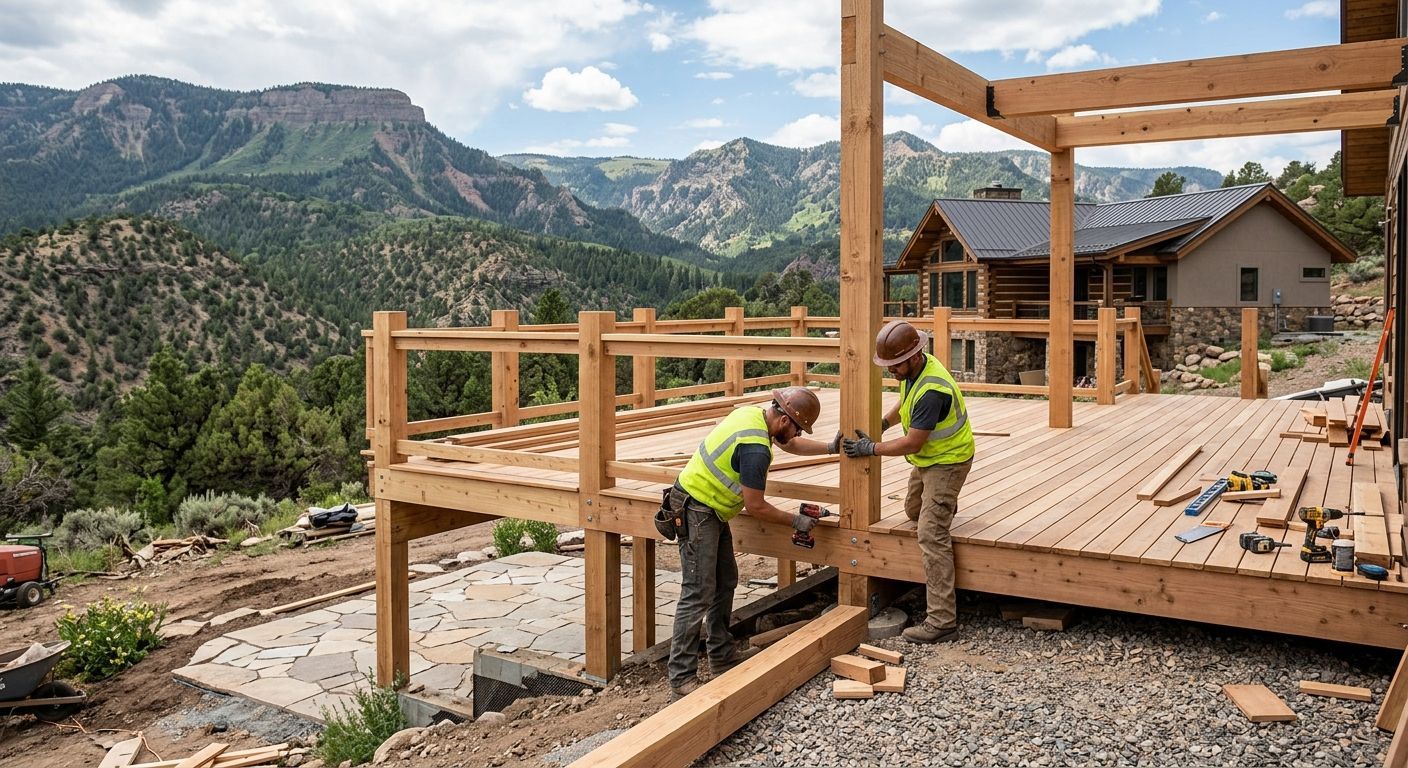
Footings are the foundation, but what goes on top has evolved significantly. The flat, single-level deck is essentially obsolete in modern design. Homeowners are now building "zoned" outdoor living spaces that function as true extensions of the home.
A typical 2026 build includes multiple distinct areas on a single structure:
- A grilling and cooking zone with weather-resistant surfaces and space for outdoor appliances
- A lounge area with comfortable seating, often partially shaded
- A dining space positioned under a custom pergola for protection from the afternoon sun
Pergolas are not optional in this climate. Summer temperatures in the Grand Junction area regularly push into triple digits. A well-designed pergola turns a deck into a genuinely usable daytime space rather than a surface you avoid until evening.
Material Choices Matter More Here Than Almost Anywhere
Grand Junction's intense UV exposure accelerates material degradation faster than most regions. Data shows that over 60% of traditional wood decks in the area show signs of severe sun damage, graying, cracking, or rot within just five years if left unsealed or poorly maintained.
That statistic shapes every material recommendation for 2026 builds. The two dominant choices are:
- Composite (WPC) Decking: Wood-plastic composite boards mimic the look of natural wood without absorbing moisture or UV damage at the same rate. They do not require annual sanding, staining, or sealing. For a low-maintenance, long-lasting surface, composite is the top recommendation for this climate.
- Treated and Sealed Wood: For homeowners committed to natural wood, the 2026 color trend leans toward rich earth tones. Warm cedar, charcoal, and matte black stains are replacing weathered gray. Darker finishes also hide the region's blowing dust and grit far better than lighter alternatives.
Either path works. The key is committing to the right material before the build, not retrofitting a cheap surface after it fails.
Integrated Lighting Completes the Build
September evenings in Grand Junction are genuinely beautiful. Temperatures cool quickly after sunset, and the sky clears. A well-lit deck becomes the best room in the house during this time of year.
LED lighting integrated into the structure is a dominant 2026 trend for good reason. Designers are placing low-voltage LEDs under stair treads, inside post caps, and along railings. The effect is functional and visually striking without being obtrusive. It also eliminates the tripping hazard that comes with dark stair edges.
This is not decorative-only thinking. Proper stair and railing lighting is a genuine safety feature for families with children or elderly members.
A deck built on unstable footings is never a bargain. If you are planning a new outdoor space or suspect your existing structure is shifting, get a professional assessment before the problem worsens.
Contact Kokes Constructs to talk through your project and get an estimate from a team that knows exactly what Grand Junction soil demands.
Frequently Asked Questions
How deep do deck footings need to be in Grand Junction?
Footings must reach below the local frost line and through the moisture-active clay zone. A qualified contractor will assess your specific soil conditions and local code requirements to determine the correct depth for your property.
Is composite decking worth the higher upfront cost in this area?
For most Grand Junction and Montrose homeowners, yes. The intense UV exposure and wide temperature swings accelerate the wear on untreated wood. Composite materials resist this damage and eliminate the recurring cost of annual maintenance, making the total cost of ownership lower over the life of the deck.
Can a pergola be added to an existing deck?
In many cases, yes. The key factor is whether the existing footings and framing can handle the added load. A structural assessment is necessary before attaching any new overhead structure to an older deck.
What permits are required for a deck build in Grand Junction?
Most new deck construction requires a building permit through the local jurisdiction. Your contractor should handle the permitting process and ensure the build meets current code requirements for setbacks, footing depth, and structural load.
How long does a properly built deck last in this climate?
A deck built with correctly set footings, quality materials, and proper drainage can last 25 to 30 years. The lifespan drops significantly when clay soil movement is not accounted for during installation.
Recent Posts